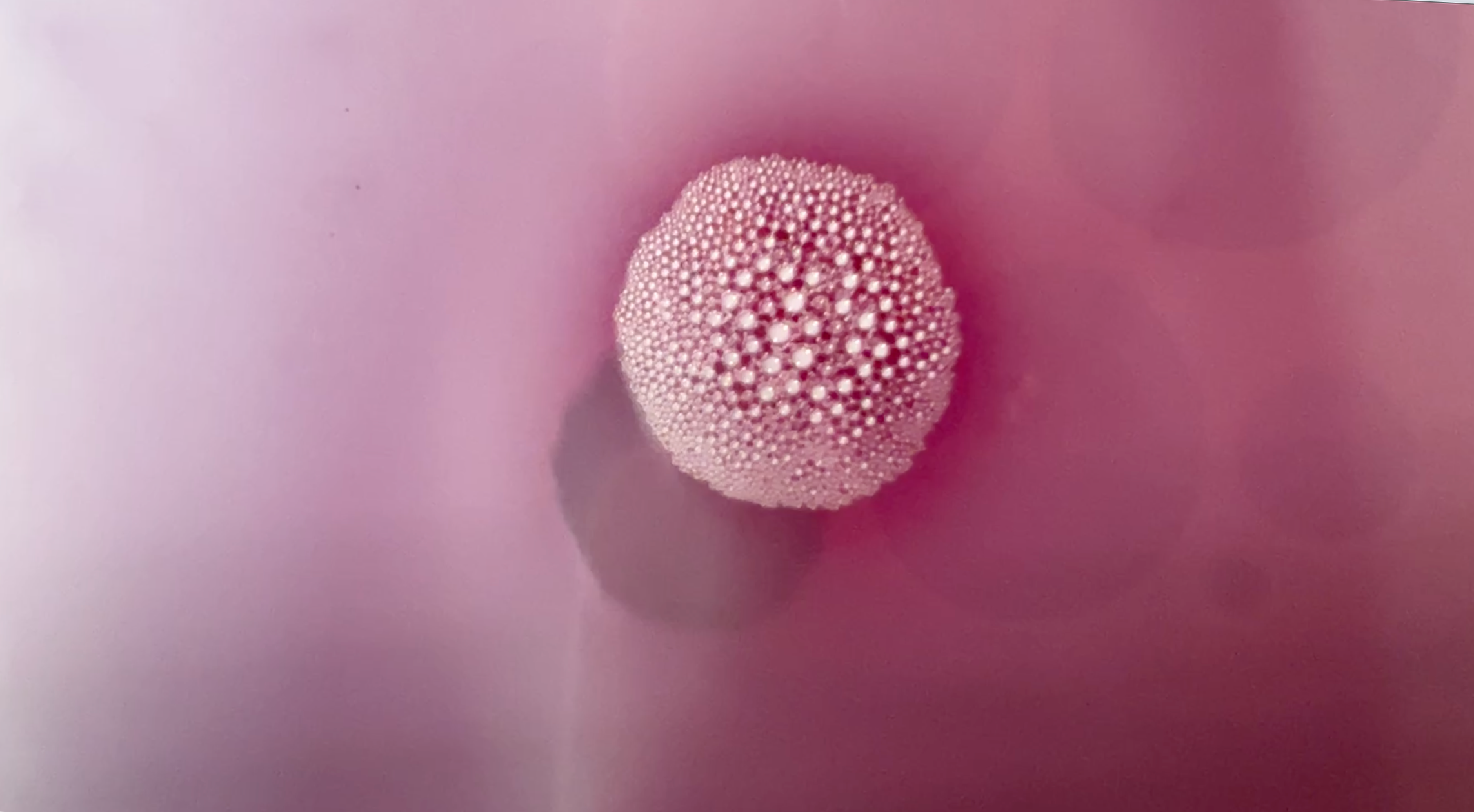
During the deep Maine winter of 2024, I began experimenting with slime mold in my studio. There were no actual slime molds present: the experiment was to see what might happen if I invited the intelligence of slime mold to come create with me.
Slime molds have become scientific rock stars because they repeatedly challenge our assumptions about intelligence. They have outperformed human engineers and helped NASA map dark matter. They can also somehow shift from countless individual cells into a single, visible superorganism that thinks, moves, and hunts as one before dissolving back into countless independent lives. This ability to change states of being fascinated me.
The Process
Science tends to observe: I long for collaboration.
So one Tuesday morning I stood in my studio and asked, aloud, if the intelligence of slime mold would come create with me.
Many surprises ensued. A series of powerful impulses arose and immediately co-opted my studio practice:
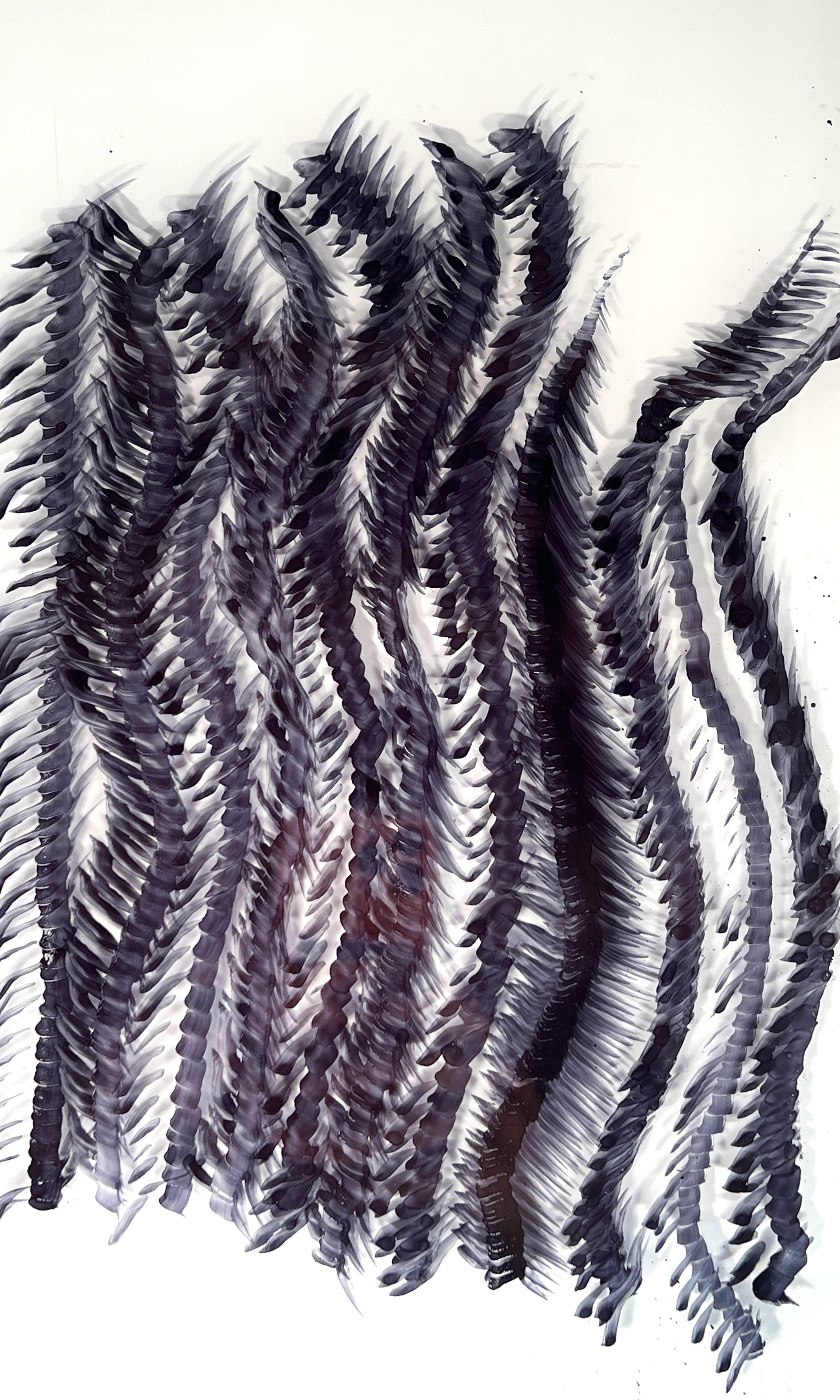
I began making explosive bilateral marks, for days and weeks on end.
I began drawing those marks on glass - a new surface for me.
I became obsessed with sporulation, and the force that causes spores to eject.
One morning I woke up completely left handed. I had to brush, tie shoes, and write left handed and felt a sense of grounded elation.
And on that fateful, left-handed day, slime molds started drawing pictures of themselves when I wasn’t looking.
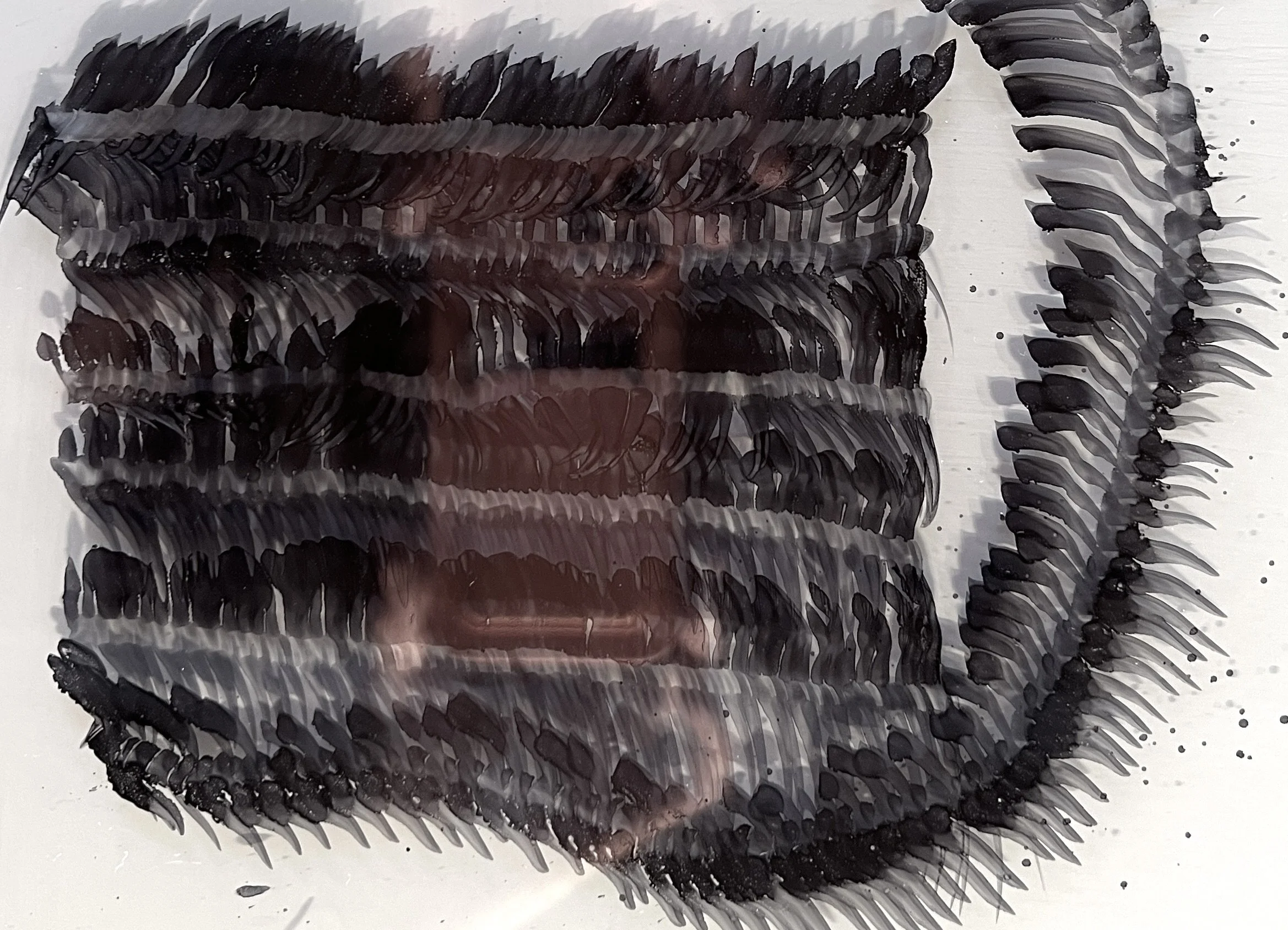
The Initial Outcome
Bilateral marks on glass - typical of the weeks after I asked Slime Mold intelligence to collaborate with me.
The same drawing, now with a possible self portrait of erupting spore. It emerged when I was cleaning and, for who-knows-what-reason, left the studio to get tea after I sprayed Windex on my marks on the glass without wiping it down first.
The Evoultions
I continued my practice of bilateral mark-making on glass and, over the next few weeks, a number of spore-looking drawings emerged. One day, however, something wholly new appeared.
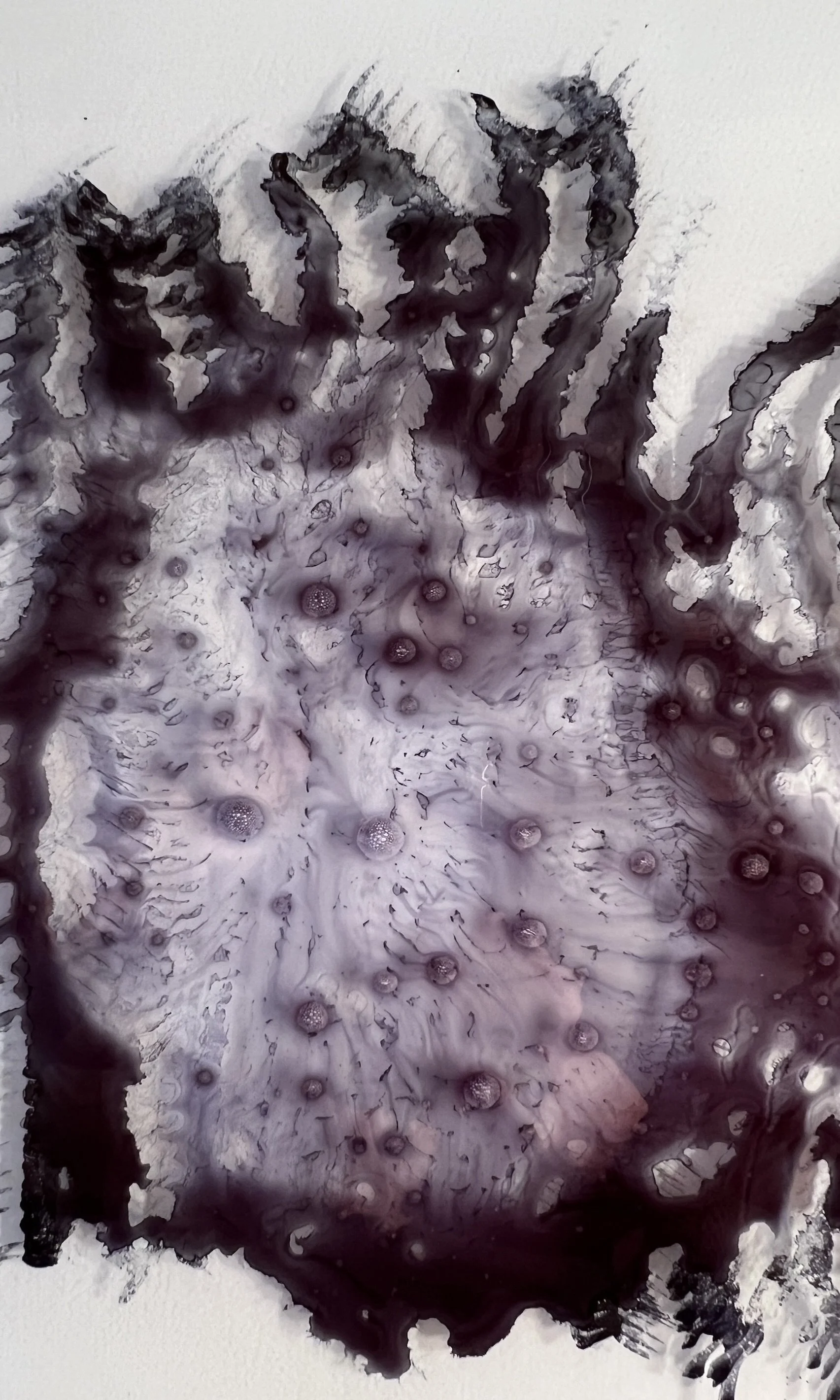
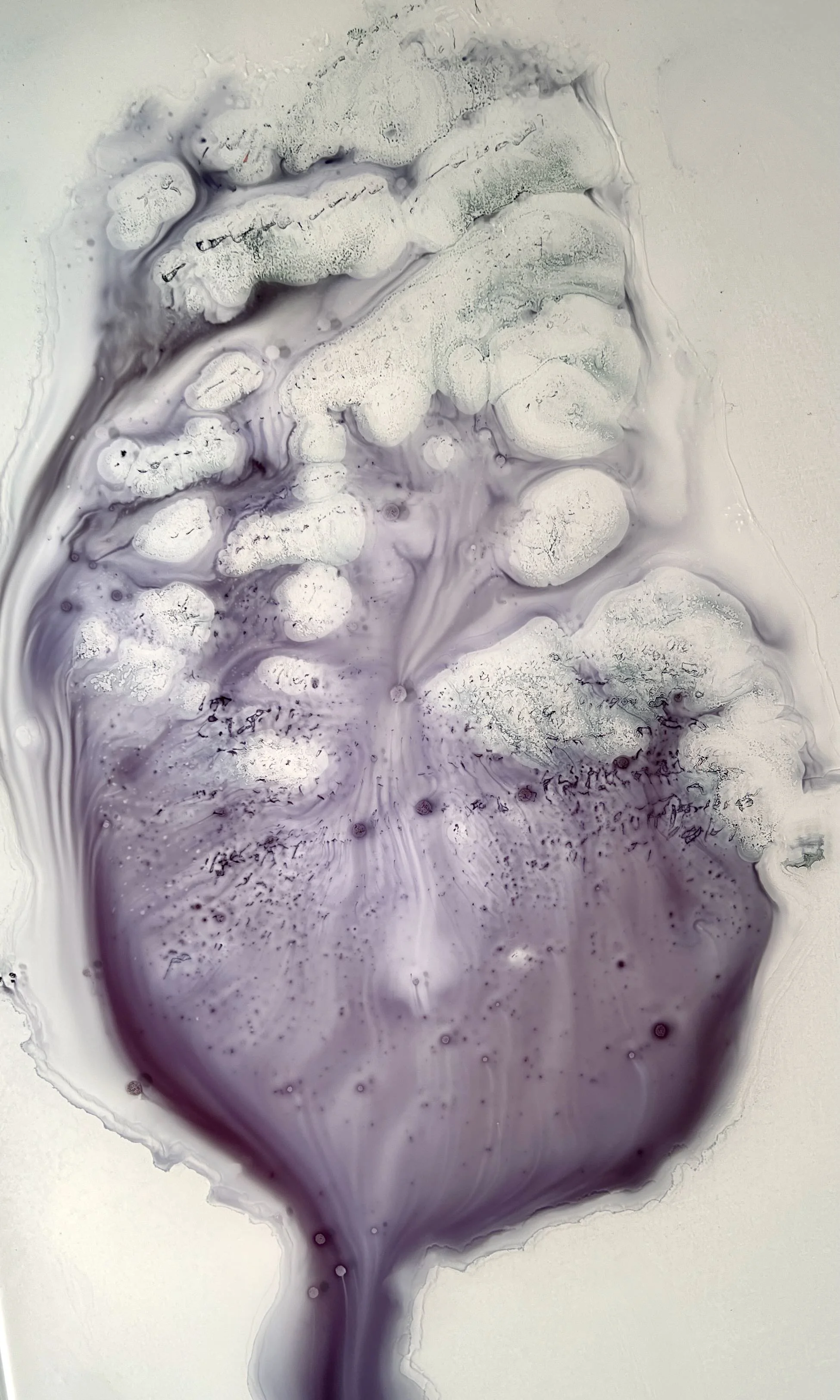
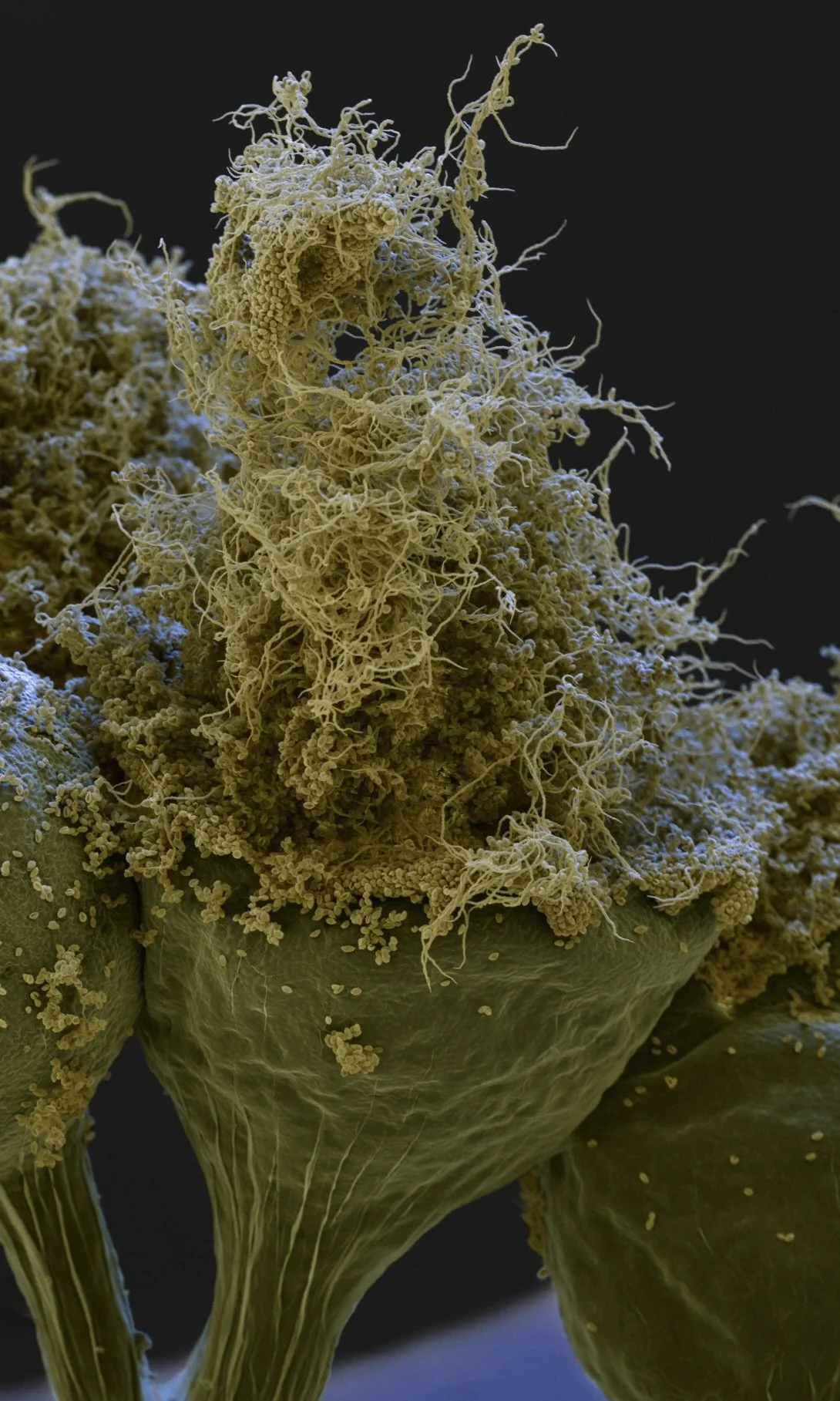
The performance lasted for nearly two hours. Individual spores slowly floated upward, emerging from the fruiting body and dispersing one by elegant one.
Did the intelligence of slime mold teach me how to shift between individuality and collective intelligence? I honestly don't know. Shortly after this experiment, I did become deeply compelled to investigate how human groups think, perceive, and solve problems differently than individuals—a question that now sits at the heart of my participatory installations.
I can only describe it as an experience in which slime molds somehow preparedmy brain to take part in a two-way experiment.